
Bikaner has plenty of places to stay. Fewer of them are actually resorts in any meaningful sense of the word. Here’s how to tell the difference before you book, and what genuinely matters once the desert heat sets in.
“Resort” gets used loosely in Bikaner, the same way it does across most of Rajasthan. A resort, technically, is a hotel that’s been rebranded for the tourist season. Sometimes it’s a genuine property with grounds, a pool, and space designed around rest rather than just a bed for the night. The word alone won’t tell you which one you’re booking.
This matters more in Bikaner than it does in most Indian cities, because the climate here isn’t gentle. Daytime heat through much of the year is real, the city itself is dense and historic rather than sprawling, and a property with genuine outdoor space, shade, and water becomes less of a luxury and more of a practical requirement for actually enjoying a few days here. This guide covers what to check before booking a resort in Bikaner, and why some of these details matter more here than they would somewhere cooler.
Why the Resort-vs-Hotel Distinction Actually Matters Here
In a city like Bikaner, most of what draws visitors — Junagarh Fort, the old city’s havelis, the camel breeding farm, the desert dunes at Raisar — is genuinely worth experiencing at dawn or dusk, when the light and temperature are both kinder. That leaves the middle of the day, which in a hotel with no real outdoor space means sitting in a room with the curtains drawn. In a proper resort, it means a pool, a courtyard with shade, or a garden where the afternoon is something to look forward to rather than something to wait out.
This is the practical case for choosing a resort over a standard hotel in Bikaner specifically: the desert doesn’t pause for your itinerary, and where you’re staying determines whether the hottest hours of the day are dead time or genuinely restful ones.
Six Questions Worth Asking Before You Book
These are less a checklist and more the actual questions worth putting to any resort in Bikaner before you commit — in the order they tend to matter.
“Does it actually have outdoor space, or just a name that implies it?”
A genuine resort with a pool in Bikaner should have grounds you can walk, sit in, or use — a lawn, a courtyard, real shade — not just a driveway and a lobby with a garden mural. Ask specifically what outdoor amenities are on-site, rather than assuming the word “resort” guarantees them.
“How does it handle the heat, practically?”
A pool matters, but so does shade around it, the quality of the air conditioning in rooms, and whether communal areas are designed with the climate in mind — thick walls, courtyards, covered walkways — rather than simply air-conditioned boxes. Traditional Rajasthani architecture handled desert heat long before mechanical cooling existed, and a resort that draws on that knowledge tends to be more comfortable than one that relies purely on air conditioning.
“Is the food genuinely Rajasthani, or a generic multi-cuisine menu with a few local dishes added on?”
Bikaner has its own distinct food culture — bhujia, rasgulla, and a strong vegetarian Marwari tradition, alongside classic Rajasthani thali cooking. A resort that treats this as its core offering, rather than a side note to a generic Indian-Continental menu, is usually a better indicator of overall attention to detail.
“How far is it from Junagarh Fort and the old city, and does that distance actually matter for your trip?”
Some properties sit close to Junagarh Fort and the old city’s havelis, useful if you want to walk to the fort at opening time or explore the markets without a long drive. A resort near Junagarh Fort suits a heritage-focused trip well. Others sit further out, toward the desert and the camel research centre, trading proximity to the fort for more space, quiet, and genuine desert-edge scenery — the better choice if you’re after a true desert resort in Bikaner experience rather than a base for sightseeing. Neither is wrong — it depends on whether your trip is built around the city’s heritage sites or around the desert experience itself.
“If you’re hosting an event, does it actually have the space for it?”
Bikaner draws a meaningful number of destination weddings and family celebrations, and a genuine resort for a wedding in Bikaner needs real event lawns or banquet space — not just a repurposed dining hall. If a celebration is part of your trip, ask specifically about capacity and outdoor event space rather than assuming any hotel can accommodate it.
“Does the property feel like Rajasthan, or does it feel like anywhere?”
This is the hardest thing to check from a website, but it’s usually visible in the details: traditional craftsmanship in the furnishings, warm textures and colours rather than generic modern minimalism, architecture that references the region rather than ignoring it. A resort built around Rajasthan’s own design language tends to deliver a more memorable stay than one that could be swapped into any city in India.
Where Bikaner’s Resorts Tend to Cluster
Broadly, resorts in Bikaner fall into two geographic groups, and it’s worth knowing the trade-off before choosing.
Near the old city and Junagarh Fort
Properties in this belt put you within easy reach of the fort, the havelis, and the old city’s markets — useful if your priority is Bikaner’s heritage architecture and you want to minimise driving between sites.
Toward the desert edge
Properties further out trade some of that proximity for more grounds, quieter surroundings, and easier access to the camel breeding farm, desert camping, and sunset safari routes. For a trip built more around the desert experience than the city’s monuments, this is often the more rewarding location.
Neither location is objectively better — it genuinely depends on what your Bikaner trip is for.
What a Good Day at a Bikaner Resort Actually Looks Like
A well-designed stay in Bikaner tends to follow the climate rather than fight it: an early start for the fort or the markets while the morning is still cool, a quiet, shaded, or pool-based midday when the sun is at its hardest, and the evening kept free for the city’s best asset — a sunset camel safari over the dunes, with the desert turning gold and then violet as the heat finally breaks.
This rhythm only works if the resort itself supports it. A property with a genuine pool and shaded outdoor space turns the midday hours into rest rather than confinement, and a kitchen that takes Rajasthani food seriously means the evening meal is one of the better parts of the day, not an afterthought.
What This Looks Like at Gaj Kesri
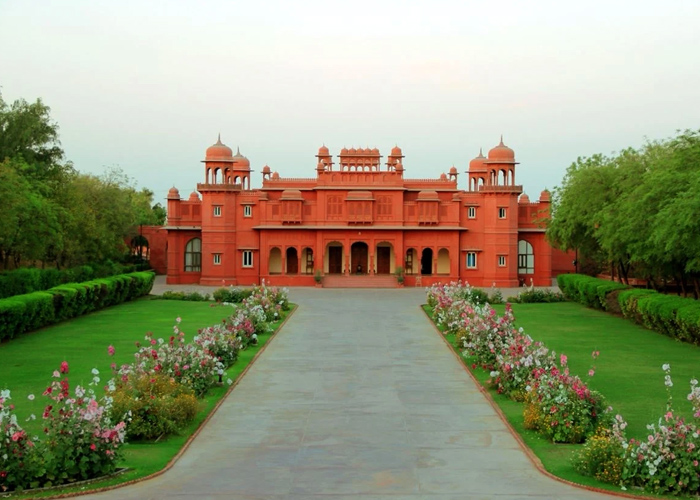
Gaj Kesri, a heritage resort in Bikaner, is built around this same logic — 45 rooms and suites designed with traditional Rajasthani craftsmanship and warm, regional textures rather than generic modern interiors, an outdoor pool and wellness area for the midday hours, and Polki, its pure-vegetarian in-house restaurant, serving Indian and Rajasthani dishes alongside international options from a regal, courtyard-adjacent setting. The property also has dedicated event space for smaller private gatherings, and organises sunset camel safaris and desert camping as part of its on-site experiences.
It’s one example of what a genuine luxury resort in Bikaner looks like when it meets the criteria above — not the only one, but a useful reference point for what to expect from a real resort stay rather than a rebranded hotel room.
Gaj Kesri By 7 Apple Resorts, Bikaner — 45 rooms and suites, pure-vegetarian Rajasthani dining, outdoor pool, and desert experiences on-site.
Explore Gaj Kesri, Bikaner →
Frequently Asked Questions
What’s the difference between a hotel and a resort in Bikaner?
A resort in Bikaner should offer genuine outdoor space — a pool, gardens, or courtyards — alongside the room itself, designed around rest and the desert climate rather than simply providing a bed for the night. A standard hotel may lack this outdoor infrastructure entirely.
Is it worth staying near Junagarh Fort or further toward the desert?
It depends on your priorities. Staying near the fort and old city suits a heritage-focused trip with minimal driving between sites. Staying toward the desert edge suits a trip built more around camel safaris, desert camping, and quieter surroundings.
Do Bikaner resorts serve vegetarian and Rajasthani food?
Many do, though the quality and authenticity vary. It’s worth asking specifically whether Rajasthani cuisine is central to the menu or a minor addition to a generic multi-cuisine offering.
Can a resort in Bikaner host a wedding or family celebration?
Some can, provided they have genuine event lawns or banquet space rather than a repurposed dining area. It’s worth confirming capacity and outdoor event space directly if a celebration is part of your plans.
What time of year is best for a resort stay in Bikaner?
Winter, from around October to March, offers the most comfortable daytime temperatures for sightseeing, camel safaris, and desert camping, with resort pools and shaded outdoor space becoming more valuable during the hotter months from April onward.
Bikaner rewards a slower kind of stay — mornings at the fort, a quiet midday, and evenings that belong to the desert. Whether a property genuinely supports that rhythm, or simply gives you a room to wait out the heat in, is really the whole question behind “resort in Bikaner.”
Ask the six questions above before you book anywhere, and the best resort in Bikaner for your trip becomes fairly clear.