
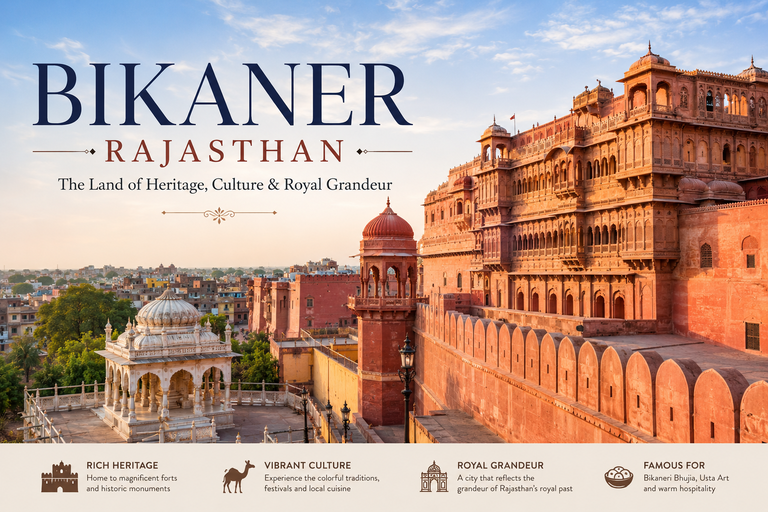
Bikaner doesn’t announce itself the way Jaipur does. There are no travel posters of this city in airport terminals, and it rarely leads a Rajasthan itinerary. And yet, for those who make the journey into the northern Thar Desert, Bikaner consistently delivers one of the most authentic, unhurried, and rewarding experiences in all of Rajasthan. Royal forts that were never conquered, a rat temple that has been drawing pilgrims for 600 years, camel safaris across golden dunes at sunset, and some of the finest bhujiyas and sweets in the country — Bikaner is Rajasthan without the tourist fatigue.
This guide covers every major thing to do in Bikaner in 2026, the best time to visit, how to get there, and where to stay — including the Gaj Kesri by 7 Apple Hotels, one of Bikaner’s most welcoming properties for leisure and business travellers alike.
Why Bikaner Deserves a Place on Your Rajasthan Itinerary
Most Rajasthan trips follow a well-worn route: Jaipur, Jodhpur, Jaisalmer. Bikaner sits slightly off that corridor — 267 km from Jaisalmer and 354 km from Jaipur — and that distance is exactly what preserves its character. The old city is genuinely old. The havelis are lived in. The bazaars sell things locals actually use. And the fort — Junagarh — is considered by many historians to be among the finest palace-fort complexes in India, yet sees a fraction of the crowds that Amber Fort in Jaipur attracts.
Bikaner is also the undisputed camel capital of India. It hosts the world-famous Bikaner Camel Festival every January, runs one of only two National Camel Research Centres in the country, and has been breeding and training the finest riding camels for centuries. If the camel is the soul of Rajasthan, Bikaner is where that soul lives.
Best Time to Visit Bikaner in 2026
| Season | Months | Temperature | Verdict |
|---|---|---|---|
| Winter | October – March | 4°C – 23°C | ⭐ Best — ideal for all activities |
| Monsoon | July – September | 25°C – 35°C | 🟡 Okay — sporadic rain, fewer crowds |
| Summer | April – June | 28°C – 46°C | 🔴 Avoid — extreme heat, dust storms |
The unambiguous answer is October to March. Daytime temperatures hover around a comfortable 22°C, the nights are cool and clear, and every major activity — camel safaris, fort visits, desert camping, and the Camel Festival — is available and enjoyable. January is especially rewarding if you can time your visit around the Bikaner Camel Festival (January 9–11, 2026).
💡 Booking tip: December, January, and February are peak season. Book your stay at Gaj Kesri, Bikaner at least 3–4 weeks in advance during these months.
Top Things to Do in Bikaner in 2026
1. Explore Junagarh Fort — The Fort That Was Never Conquered
Every Bikaner itinerary begins here, and rightly so. Junagarh Fort is one of the most remarkable fort complexes in India — not because of its hilltop drama (it sits on the flat desert floor, unlike most Rajput forts), but because of what is inside. Built by Raja Rai Singh in 1589, the fort was attacked repeatedly over the centuries and never once taken. That invincibility is written into its very walls.
Inside, 37 palaces built by successive rulers over four centuries create a world of carved red sandstone, lacquered ceilings, gold-inlaid walls, and mirror-work chambers. The Anup Mahal — the royal audience hall — is covered in red and gold with coloured glass inlay. The Badal Mahal (Cloud Palace) features white plaster pillars delicately painted with monsoon cloud motifs and finished in gold leaf. The museum within the fort houses Persian and Sanskrit manuscripts, royal costumes, ancient weapons, and miniature paintings.
- Timings: 10:00 AM – 4:30 PM (open all days)
- Entry fee: ₹50 for Indians | ₹300 for foreigners
- Museum entry: ₹20 additional for Indians
- Tip: Pick up the official audio guide at the entrance — it adds significant depth to the experience and avoids the persistent unofficial guides at the gate
2. Visit Karni Mata Temple — The Sacred Rat Temple of Deshnoke
About 30 km from Bikaner in the small town of Deshnoke sits one of the most unusual and spiritually charged temples in India. Karni Mata Temple is home to approximately 25,000 sacred rats — called kabbas — who are believed to be the reincarnated souls of devotees and are revered and protected by the temple. The white rats among them are considered especially auspicious.
The experience is genuinely unlike anything else in Rajasthan: the marble floors of the temple courtyard are covered in moving rats, pilgrims leave offerings of milk and grain, and the atmosphere is one of calm reverence rather than the chaos a newcomer might expect. The temple dates back 600 years. Remove your shoes at the entrance — this is a place of active worship, not just a tourist attraction.
- Distance from Bikaner: 30 km (45 minutes by car)
- Timings: 4:00 AM – 10:00 PM
- Entry: Free | Camera fee applies
3. Camel Safari in the Thar Desert
No trip to Bikaner is complete without a camel safari into the Thar Desert. Unlike the commercialised camel rides at more famous destinations, Bikaner’s desert safaris tend to be quieter, longer, and more immersive — partly because of the sheer quality of camels bred here, and partly because the tourist density is lower.
The most rewarding safaris leave in the late afternoon, time your arrival at the sand dunes for the golden hour, and return after dark under a sky full of stars. Many operators offer overnight desert camping with folk music performances, traditional Rajasthani dinner, and sleeping under open skies. The Raisar Sand Dunes, about 8 km from the city, are the most accessible departure point.
- Best season: October to March
- Duration: 2-hour sunset rides to full overnight camping packages
- Book through: Your hotel concierge at Gaj Kesri Bikaner for vetted, reliable operators
4. Attend the Bikaner Camel Festival 2026 (January 9–11)
The Bikaner International Camel Festival, organised by the Rajasthan Department of Tourism, is one of India’s most spectacular cultural events and the single best reason to time your Bikaner visit for January. The 2026 edition runs from January 9th to 11th.
The festival opens with a grand camel procession that begins at the historic Junagarh Fort and winds through the main city streets before culminating at the Dr. Karni Singh Stadium. Events across the three days include camel races, camel dance performances (camels trained to move in rhythm with folk music), best-decorated camel competitions, camel beauty contests, and cultural performances of Kalbelia, Ghoomar, and other traditional Rajasthani folk arts. Entry to all events is free.
- Dates: January 9–11, 2026
- Venue: Junagarh Fort, Dr. Karni Singh Stadium, Raisar Sand Dunes
- Timings: 12:00 PM – 10:00 PM (approx.)
- Entry: Free for all attendees
- Important: Hotel rooms sell out weeks in advance during the festival. Book Gaj Kesri Bikaner early to secure your stay
5. Walk the Rampuria Havelis — Bikaner’s Merchant Quarter
While most travellers make a beeline for the fort, the Rampuria Havelis in the old city are among the finest examples of merchant architecture in Rajasthan and are far less visited. These elaborately carved havelis were built by wealthy Marwari traders in the 18th and 19th centuries and feature an extraordinary blend of Rajasthani, Mughal, and European architectural styles — carved sandstone jharokhas (latticed windows), painted facades, and ornate inner courtyards.
The best way to experience them is on a walking tour through the old city lanes — a local guide will take you through the narrow bazaar streets, past the Kote Gate and into residential neighbourhoods where the carvings on ordinary house walls would be museum-worthy anywhere else in the world.
6. Visit the National Research Centre on Camel
About 8–10 km from the city, the National Research Centre on Camel (also called the Camel Breeding Farm) is a fascinating and genuinely educational half-day visit. It is one of only two such institutions in the world and houses over 400 camels of multiple breeds, including the famous Bikaner racing camel. Visitors can walk through the breeding farm, observe different camel breeds up close, take a short camel ride, and — the highlight for most visitors — taste camel milk ice cream, a unique Rajasthani experience.
- Timings: 3:00 PM – 5:00 PM (best visiting window)
- Distance from city: 8–10 km
- Entry: Nominal fee
7. Discover Lalgarh Palace
Lalgarh Palace was built in the early 20th century by Maharaja Ganga Singh as a modern royal residence outside the fort walls. The architecture is a striking fusion of Rajput, Mughal, and Victorian European styles — red sandstone jharokhas sit alongside arched European-style verandahs and courtyards designed for formal state gatherings. Part of the palace is now a heritage hotel; the public areas and museum are open to visitors and worth an hour of exploration.
8. Shop at Kote Gate Bazaar
Bikaner’s old bazaars clustered around the Kote Gate area are among the most authentic shopping streets in Rajasthan. The city is particularly famous for its woollen shawls and blankets, leather embroidered items, silver jewellery, miniature paintings, and lacquerware. Don’t leave without picking up the city’s signature export — Bikaneri Bhujia, the thin, spiced gram-flour snack that Bikaner produces and distributes nationwide. The most reputable shops are the old family establishments on Station Road and near the fort gate.
Food You Must Try in Bikaner
Bikaner has one of the most distinctive culinary identities in Rajasthan. The city’s dry desert climate shaped a cuisine built around preserved, fried, and spiced foods that travel well and last long. Here’s what to eat:
- Bikaneri Bhujia: The original and finest version of the snack now found across India — thin, crisp, and intensely spiced. Buy from established local shops rather than tourist stalls
- Kachori: Deep-fried pastry shells stuffed with spiced lentils — eaten for breakfast, lunch, and snack time with equal enthusiasm
- Rasgulla and Gulab Jamun: Bikaner’s sweets are made with high-quality milk from the region’s livestock and are notably superior to the packaged versions available elsewhere
- Camel Milk Products: Available at the National Research Centre — camel milk is rich in nutrients and has a distinctive, slightly salty taste. The ice cream is the most approachable version for first-timers
- Dal Baati Churma: The iconic Rajasthani meal — baked wheat balls served with lentil curry and a crumbled sweet — is done exceptionally well in Bikaner’s traditional restaurants
How to Get to Bikaner
By Train
The most comfortable and practical way to reach Bikaner. Bikaner Junction is well-connected to Delhi (7–9 hours overnight), Jaipur (5–6 hours), Jodhpur (5–6 hours), and Jaisalmer (5–6 hours). Several express trains run daily. Overnight sleeper trains from Delhi are the most popular option for travellers from the capital.
By Air
The Naal Airport in Bikaner is approximately 20 km from the city centre. It has limited commercial connections; most travellers fly into Jaipur (354 km) and complete the journey by train or hired cab.
By Road
Bikaner is connected by NH11 and NH15 to major Rajasthan cities. Delhi is 458 km, Jaipur 354 km, Jodhpur 235 km, and Jaisalmer 267 km. The roads are generally in good condition; a hired cab from Jaisalmer or Jodhpur is a popular option for travellers doing a multi-city Rajasthan circuit.
Where to Stay in Bikaner: Gaj Kesri by 7 Apple Hotels
Bikaner’s accommodation scene ranges from budget guesthouses near the station to heritage properties and modern hotels. For travellers seeking a comfortable, well-serviced base with easy access to the city’s major attractions, Gaj Kesri by 7 Apple Hotels is among the finest options in the city.
The property combines contemporary comfort with the warmth of Rajasthani hospitality — an important distinction in a city where the tourist experience can feel transactional at budget-end properties. Whether you’re visiting for the Camel Festival in January, a heritage tour in November, or a business trip that leaves time for an evening at the fort, Gaj Kesri provides the right balance of comfort and accessibility.
Plan your Bikaner trip today. Whether it’s the Camel Festival in January or a quiet winter heritage tour, Gaj Kesri by 7 Apple Hotels is your ideal base in the desert city. Book directly for best rates and guaranteed availability.
Bikaner 2-Day Suggested Itinerary
Day 1 — Forts, Havelis & the Old City
- Morning: Junagarh Fort (allow 2–3 hours, include the museum)
- Afternoon: Rampuria Havelis walking tour through the old city lanes
- Late afternoon: Kote Gate Bazaar — shop for bhujia, shawls, and silver
- Evening: Lalgarh Palace grounds and sunset from the palace gardens
Day 2 — Desert, Camels & Temples
- Morning: Drive to Karni Mata Temple, Deshnoke (30 km)
- Afternoon: National Research Centre on Camel (3–5 PM visiting window)
- Late afternoon/Evening: Camel safari to the Raisar Sand Dunes — sunset and optional overnight camp
Frequently Asked Questions About Visiting Bikaner
1. What is the best time to visit Bikaner in 2026?
The best time to visit Bikaner is October to March, when daytime temperatures are a comfortable 15–23°C and all major activities — camel safaris, fort visits, desert camping, and the annual Camel Festival — are fully available. January is the peak of the season, coinciding with the Bikaner International Camel Festival (January 9–11, 2026). Avoid April to June when temperatures exceed 40°C. For a comfortable stay during peak season, book Gaj Kesri Bikaner well in advance.
2. How many days are enough to explore Bikaner?
Two full days are sufficient to cover all the major attractions — Junagarh Fort, Karni Mata Temple, the Rampuria Havelis, the National Camel Research Centre, and a desert safari. If you’re visiting during the Camel Festival or want to do a longer overnight desert camping experience, extend to three days. Bikaner is also commonly paired with Jaisalmer (267 km) or Jodhpur (235 km) as part of a larger Rajasthan circuit.
3. Is Junagarh Fort worth visiting in Bikaner?
Absolutely — it is one of the most rewarding fort visits in all of Rajasthan. Unlike hilltop forts that require climbing, Junagarh is fully accessible on flat ground and packs extraordinary architectural detail into its 37 palaces and pavilions. It was never conquered in its 400-year history. Plan at least 2 hours, hire the audio guide at the entrance, and visit in the morning before the tour groups arrive. Entry is ₹50 for Indian visitors, open daily 10 AM to 4:30 PM.
4. What is special about the Bikaner Camel Festival 2026?
The Bikaner International Camel Festival 2026 runs from January 9–11 and is organised by the Rajasthan Tourism Department. It is a free, three-day celebration featuring decorated camel processions starting from Junagarh Fort, camel races and dance competitions at Dr. Karni Singh Stadium, Rajasthani folk dance performances including Kalbelia and Ghoomar, and cultural events at the Raisar Sand Dunes. It is one of the largest camel festivals in the world and draws international visitors every year. Book your Bikaner hotel stay at least a month in advance if planning to attend.
5. What is Bikaner most famous for?
Bikaner is most famous for four things: Junagarh Fort (one of Rajasthan’s finest and the only major Rajput fort never conquered), the Bikaner Camel Festival (the world’s most celebrated camel festival), the Karni Mata Temple (the sacred Rat Temple at Deshnoke), and Bikaneri Bhujia (the spiced gram-flour snack that originated here and is now a national staple). It is also India’s premier camel-breeding city — home to the finest riding camels in the country and the National Research Centre on Camel.
Final Word: Why Bikaner Should Be on Every Rajasthan Itinerary
Bikaner rewards the traveller who takes a small detour from the standard Golden Triangle. Its fort is extraordinary, its food is exceptional, its camel culture is unrivalled anywhere in India, and its old city still has the texture of a living, breathing desert town rather than a heritage museum. The Camel Festival in January is one of the most visually spectacular events on the Indian travel calendar.
Come in winter, book your stay early, and let Bikaner take you by surprise. Start at Junagarh Fort, end your day on the sand dunes, and base yourself comfortably at Gaj Kesri by 7 Apple Hotels — where Rajasthani warmth meets modern comfort in the heart of the desert city.